Tess Marlow
·
5 min
read
What we mean by a household
Sharing shipped last week, and it took far longer than it looks. The hard part was never the invitations. It was deciding what a household is when two people disagree about a receipt.
We started from one rule and derived the rest of it: the budget owns the entries, not the person who added them. Most of the design follows from that.
What follows from that rule
Leaving a household leaves your entries behind, because they were the household's spending, not yours.
Anyone in the household can correct an amount, and the entry keeps showing who added it originally.
Deleting a budget is the only thing that deletes entries, and only its creator can do it.
Nobody gets a private category. A shared budget with secret compartments is not shared.
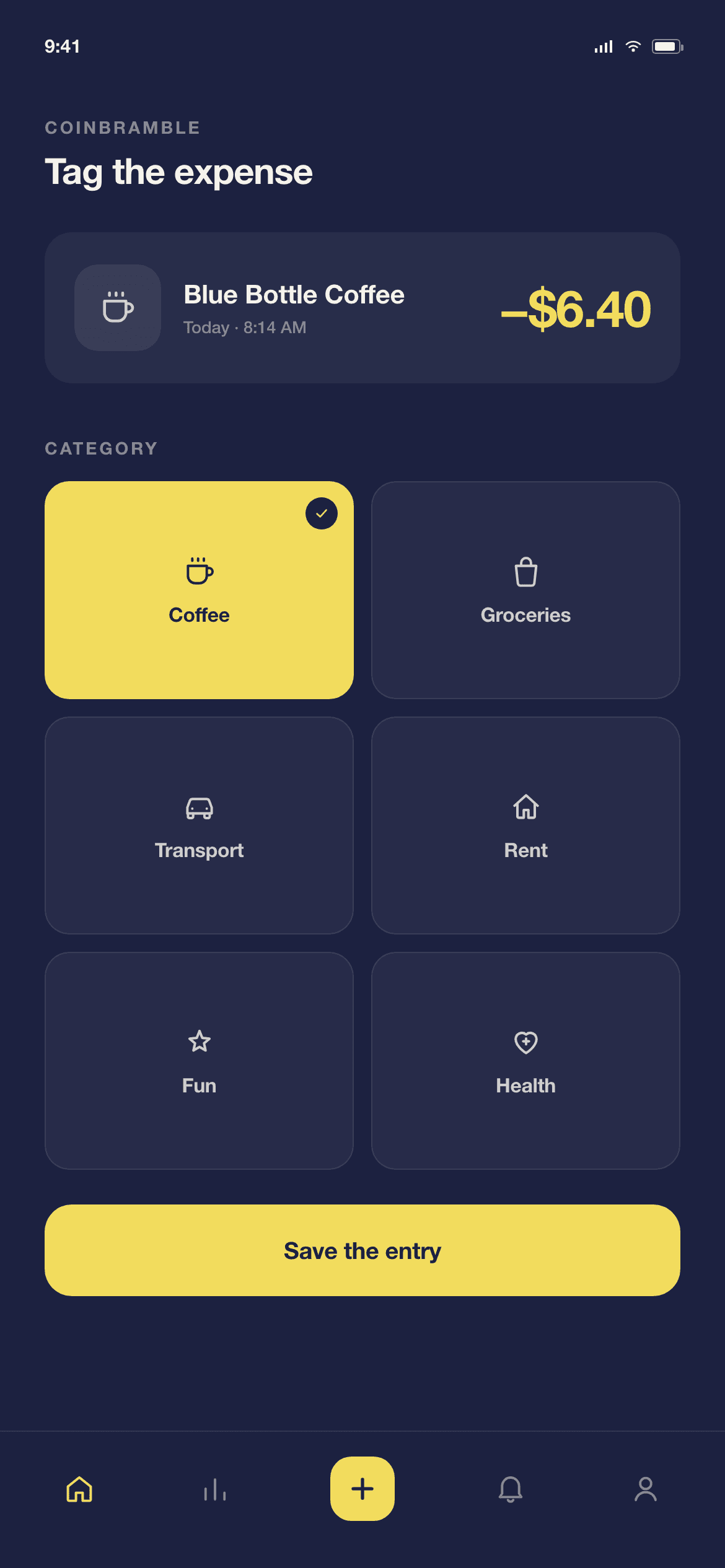
The request we keep turning down is splitting: half of this receipt is mine, half is yours, settle up at the end of the month. We are not building it. A household budget is one pot of money you are watching together, and the moment the app starts keeping score between two people in the same kitchen, it stops being a budget and becomes a ledger of small resentments.
If you need to split bills with a flatmate, use something built for that and point Coinbramble at the part of the money you actually share.
A few places open every Monday.
Leave your email on the waitlist page, and we’ll send you an invite code.
Join the waitlist